Asian Carp - Not just a local issue

I live in the tiny little town of Dover, Tennessee. It’s not uncommon for those who live in Tennessee to ask where that is - it’s that small. Aside from embarrassingly being known as the #6 speed trap in the US, Dover is known as the place at the base of the Land Between the Lakes National Recreation Area. History buffs will recognize it as the home of Ft. Donelson understanding it as the place that changed the course of the Civil War.
The Land Between the Lakes National Recreation Area is a 170,00-acre playground in Western Kentucky and Tennessee open for hunting, fishing, camping, hiking, bike riding, and exploring. It is here that national bass fishing tournaments take place and secure millions of dollars every year for lucky professional anglers. It’s also known for something else – a horrific invasion of Asian Carp.
Native to Asia, there are four species of this fish that make up the Asian Carp family – bighead carp, black carp, grass carp, and silver carp. They were first introduced to the southern US in the early ’60s and '70s as a way to control algae and weed growth in aquatic farms and sewage treatment plants. But, like all invasive species, it didn’t take long for flooding in the area to leech these guys out into the waters of the Mississippi River and rivers and lakes within the Mississippi rivershed.

With a face only a mother could love, Asian Carp are more than a nuisance in our waters.
Today, like so many other lakes and rivers, these filter feeders are taking over the waters around the LBL - Kentucky Lake and Lake Barkley. This is a huge problem for a number of reasons, not the least of which is that Asian carp have been known to dominate entire waters, and the Silver carp (the ones that jump) are not only a nuisance, they can be downright dangerous. In the four years, I've lived in Dover, I've seen a dramatic decrease in the native gamefish population.
Apart from the drop in gamefish, last year alone I had a good number of these carp jump in my boat. If you’ve never experienced it, it’s nothing short of terrifying (at least to me). You’ll be running to your next fishing hole and all of a sudden out of nowhere this beast of a fish is thrashing around in your boat threatening to break rods and leaving blood, slime, and untold other bodily fluids, and a stench that it takes a power washer to remove. Getting them off your boat is no small feat. They have also been known to knock people off of their boats and jet skis, and have even caused physical damage when they've hit people while they jump.
Apart from the physical danger, these carp also take up valuable resources for native gamefish and can kill sensitive organisms like native freshwater mussels, which understandably will mess with a water’s entire ecosystem.
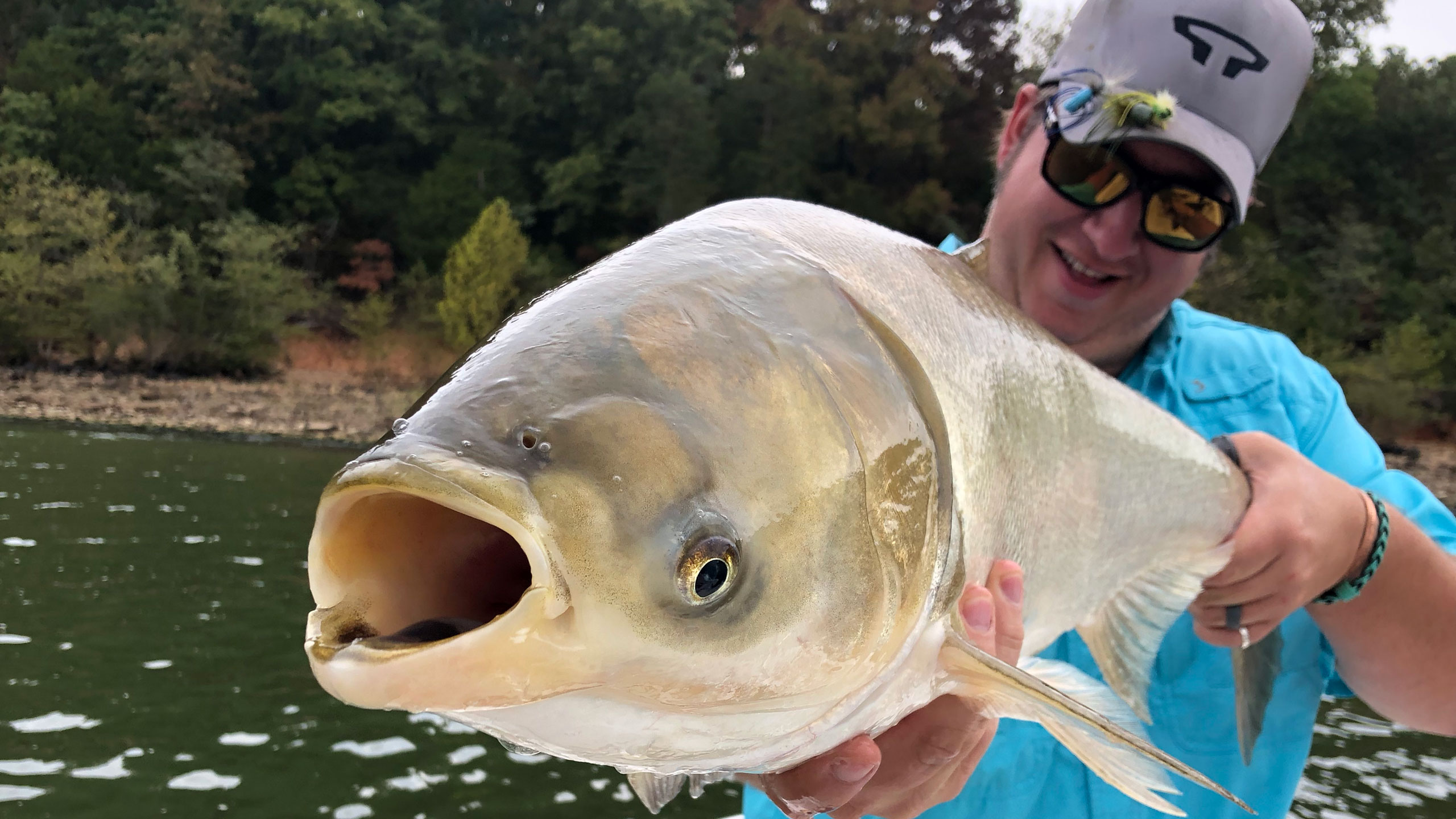
They may fight hard when hooked, but these filter feeders are not what you'd consider a game fish. As a matter of fact, they are far from it.
While they are big and if hooked fight like a saltwater monster, as filter feeders the methods to catch them don’t make them sport for many anglers (unless you like to bow fish).
Efforts to stop the Asian carp moved forward last week in the Senate Environmental and Public Works Committee which approved the America’s Water Infrastructure Act of 2020, which includes a plan to rebuild a dam in Illinois to block the advancement of these invaders toward the Great Lakes. Normally, I wouldn’t be an advocate for dams and have spent many hours fighting against them in some instances – but I am definitely an advocate for protecting our waters.
This is an issue that has the potential to affect us all. There are things you can do the help stop the spread of these invaders. Here are just a few:
Never take fish from one body of water and put them in another.
If you live near the Mississippi River watershed, trailer your boat around locks if possible. Asian carp travel up locks when they’re open.
If you fish with bait, dispose of unused bait in the garbage. NEVER PUT UNUSED BAIT INTO THE WATER! If you can’t abide by this rule, maybe now is the time to think about using only artificial lures only (or time to pick up a fly rod?).
Drain and rinse your boat every time you are done fishing and/or boating.
Don’t harvest bait or transport water from infected areas. The last thing you’d want to be responsible for is the spread of this hugely invasive species.
Contact your legislators to help stop Asian Carp. You can see the alert from the National Wildlife Federation and contact Congress through their link here: Stop Asian Carp



