Fly Line Tapers
In this edition’s Firming Your Foundation, we are going to talk about line weights. Now, remember this is a brief overview, and by no means a comprehensive package. For the sake of time and sanity, we will be talking about weight forward, double taper, shooting head and level lines. For the most part, the name of the line already explains a bit about it, but just to firm your foundation a bit more, we will go into detail below.
Weight-Forward taper:
As the name suggests, the weight forward (WF) line is a line that has extra weight added to the beginning of the line making it heavier for the about the first 30 feet. We love the weight forward since it makes it easier to cast farther, is easier to cast on windy days and makes a better presentation when chucking heavy flies. You would use WF lines when fishing for anything that swims.

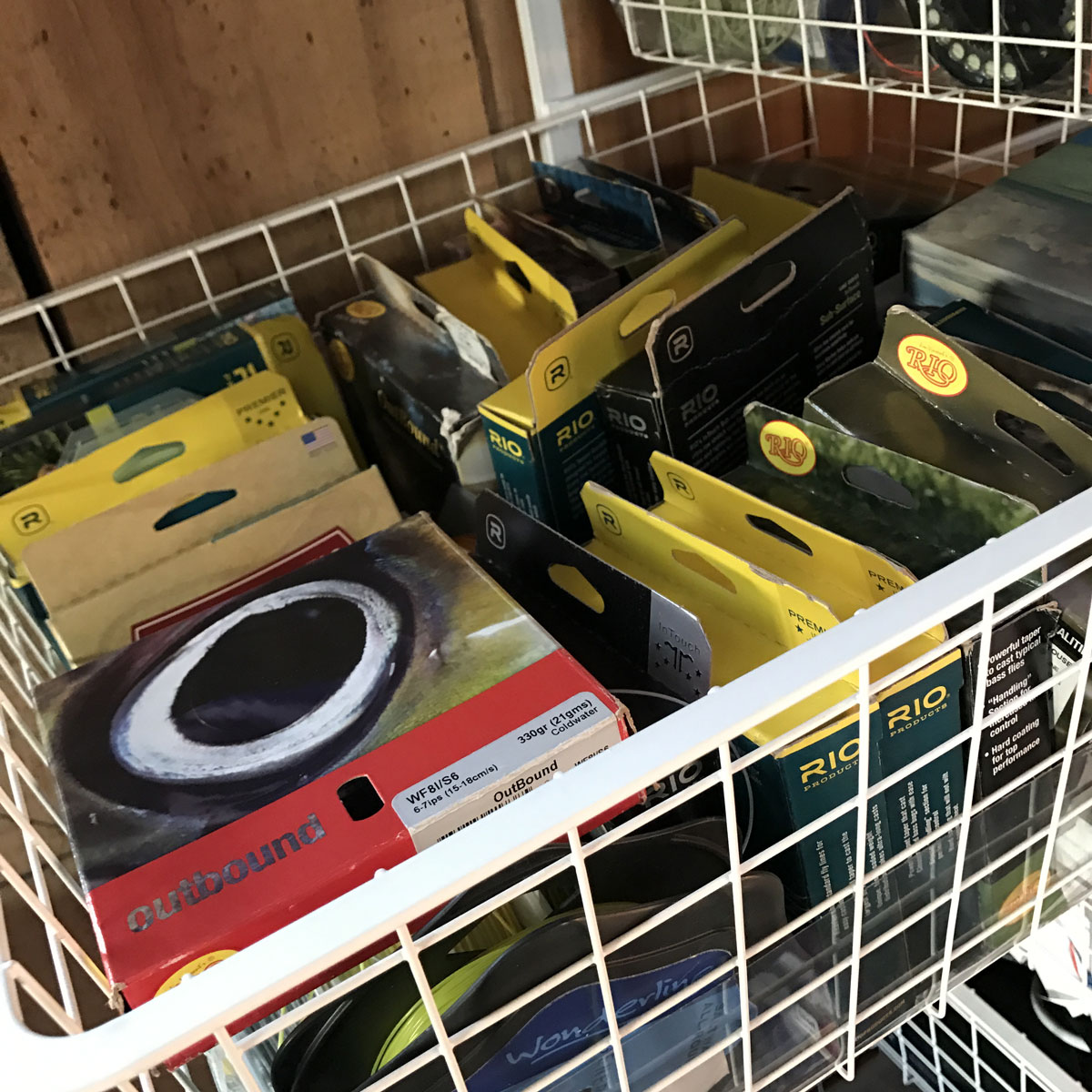
Take a look at the box. The label says it all, the weight of the line, the general taper and the sink rate.
Double Taper:
As the name says, this line has a “double taper!” On the double taper, the first 15 feet widens gradually in diameter, followed by 60 feet where the fly line is the same weight and width, and then the final 15 feet where it gradually loses width and weight, at the same rate as the front. The cool thing is, if needed, this fly line can be turned around and both ends remain equal. There are times when double taper lines are great, such as when you want to be able to present a more delicate presentation. It is easier to mend farther from you and pick up and recast without stripping in. It is, however, harder to throw in windy conditions and shoot line. In addition, accommodations to your casting stroke need to be made as you cast farther and farther to handle the added weight of the line.
Shooting head:
A shooting head is a type of weight forward line. These types of lines are used to help cast large flies, on very windy days and for long distances. These lines tend to be very heavy for their given line weight with short aggressive tapers. Shooting heads are great when chasing toothy critters or for fishing on large lakes and rivers. Shooting heads tend not to be very delicate in their presentation but are great for getting the fly out there.



